Herniated Disc Treatment in Hong Kong
Understanding Your Non-Surgical Options
If you’re waking up with lower back pain, struggling to sit through meetings, or noticing numbness travelling down your leg, you may be wondering whether a herniated disc is contributing to your symptoms.
Many people searching for herniated disc treatment in Hong Kong worry that a slipped disc automatically means surgery. In reality, many patients first explore conservative management options aimed at reducing pressure on irritated nerves, improving spinal function, and helping them return to normal daily activities.
At YourSpine Centre, every case begins with a thorough assessment to identify the source of your symptoms and determine whether conservative care may be appropriate for your individual situation.
Does This Sound Familiar?
Many patients visiting our clinic describe experiences such as:
- “I can’t sit for long without my lower back tightening up.”
- “The pain shoots from my back into my leg.”
- “My leg feels numb when I stand or walk.”
- “Getting out of bed in the morning is becoming difficult.”
- “Bending forward to put on my shoes really hurts.”
- “I’ve tried resting, but the problem keeps coming back.”
If these symptoms sound familiar, a herniated disc may be one possible factor contributing to your discomfort.
What Is a Herniated Disc?
Between each spinal vertebra sits a disc that functions as a cushion and shock absorber.
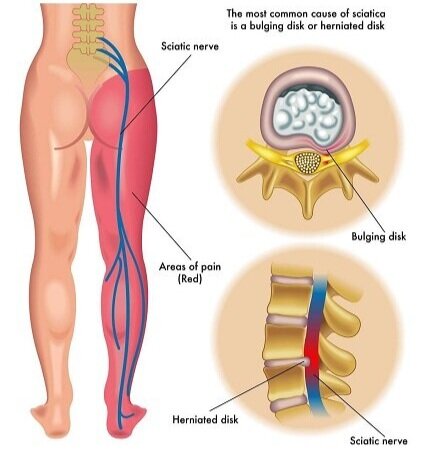
A herniated disc occurs when part of the disc protrudes outward and irritates nearby nerves. Depending on the location and severity, this may contribute to symptoms such as:
- Lower back pain
- Sciatica
- Pain extending into the buttock
- Leg numbness
- Tingling sensations
- Muscle weakness
- Difficulty walking comfortably
- Stiffness after prolonged sitting
Not everyone experiences the same symptoms, which is why a proper clinical assessment is important.
Common Signs of a Herniated Disc
Patients with herniated discs often report:
Pain After Sitting Too Long
Lower back tightness and discomfort that gradually builds up during desk work, studying, driving, or long commutes.
Difficulty Getting Up
Sharp pain or stiffness when rising from a chair, sofa, or bed, particularly in the morning.
Pain Travelling Down the Leg
A deep ache, burning sensation, or pulling pain extending from the lower back into the leg.
Leg Numbness or Tingling
Pins and needles, heaviness, altered sensation, or numbness affecting the thigh, calf, foot, or toes.
Pain When Bending Forward
Pain triggered by activities such as tying shoelaces, putting on socks, lifting groceries, or reaching toward the floor.
Why a Proper Assessment Matters
Many conditions can cause symptoms that feel similar to a herniated disc.
Lower back pain and leg symptoms may also be associated with:
- Joint dysfunction
- Spinal degeneration
- Muscle imbalance
- Postural stress
- Nerve irritation
- Multiple overlapping mechanical factors
Treating the wrong problem often delays progress.
At YourSpine Centre, every new patient receives a comprehensive clinical assessment that may include:
- Detailed health history review
- Neurological examination
- Orthopaedic testing
- Spinal mobility assessment
- Postural evaluation
- Review of existing MRI or X-ray reports (if available)
The goal is to understand what may be contributing to your symptoms before discussing management options.
Non-Surgical Management Options for Herniated Discs
Following your assessment, a personalised management plan may include one or more conservative approaches.
1. Non-Surgical Spinal Decompression
What Is Spinal Decompression?
Spinal decompression uses a specialised motorised traction table to apply controlled stretching forces to targeted spinal segments.
Clinical Goal
The aim is to reduce mechanical loading around affected spinal structures while supporting normal joint and disc function.
What Patients Can Expect
Many patients appreciate that decompression therapy is gradual, computer-controlled, and adjusted according to individual comfort levels.
2. Shockwave Therapy (ESWT)
What Is Shockwave Therapy?
Extracorporeal Shockwave Therapy (ESWT) delivers acoustic pressure waves into tight muscles and connective tissues surrounding the lower back, pelvis, and hip region.
Why Is It Used?
When back pain persists, surrounding muscles often become excessively tight and protective.
Shockwave therapy may be used to:
- Address stubborn muscle tension
- Support local circulation
- Improve soft tissue mobility
- Complement broader conservative care
It is generally used as part of a comprehensive management plan rather than as a standalone solution.
3. Chiropractic Care
Restoring Spinal Function
Restricted spinal joints can place additional mechanical stress on surrounding tissues.
Chiropractic care focuses on improving spinal mobility and joint function through carefully selected manual techniques.
Individualised Approach
Every patient presents differently.
Your care plan is tailored according to:
- Age
- Activity level
- Health history
- Symptom severity
- Clinical findings
- Available imaging results
Why Patients Often Delay Getting Their Back Checked
One of the most common things we hear is:
“I thought it would go away on its own.”
Many patients wait weeks or even months before seeking professional assessment.
During that time they may:
- Avoid exercise
- Struggle through workdays
- Depend on temporary pain-relief strategies
- Change how they sit, stand, or move
- Experience recurring flare-ups
While not every episode of back pain requires treatment, persistent symptoms that interfere with work, sleep, mobility, or daily activities often warrant professional evaluation.
The sooner you understand what may be causing your symptoms, the sooner you can make informed decisions about your next steps.
Frequently Asked Questions
Can a Herniated Disc Heal Without Surgery?
Many individuals with herniated discs are initially managed using conservative approaches. The most appropriate option depends on the individual’s clinical presentation and should be determined through proper assessment.
Is Walking Good for a Herniated Disc?
Many people tolerate gentle walking better than prolonged sitting. However, exercise recommendations should always be tailored to the individual.
Is Sciatica the Same as a Herniated Disc?
No.
Sciatica describes symptoms that travel along the sciatic nerve, such as pain, tingling, or numbness extending into the leg.
A herniated disc is one possible cause of sciatica, but it is not the only cause.
How Do I Know If My Symptoms Are Coming From a Disc?
Because several conditions can produce similar symptoms, a professional examination is usually required to determine the likely source.
Red Flags: Seek Immediate Medical Attention
Although many spinal conditions can be managed conservatively, certain symptoms require urgent medical assessment.
Seek immediate medical care if you experience:
Loss of Bowel or Bladder Control
Difficulty controlling urination or bowel function.
Saddle Numbness
Loss of sensation around the groin, buttocks, or inner thighs.
Progressive Leg Weakness
Increasing weakness, foot drop, or difficulty lifting the foot while walking.
Severe Unrelenting Pain
Pain that rapidly worsens or remains severe regardless of position.
Conveniently Located in Tsim Sha Tsui, Hong Kong
Living with lower back pain, sciatica, or leg numbness can make even routine travel feel uncomfortable.
YourSpine Centre is conveniently located in Tsim Sha Tsui, Hong Kong, approximately a 10-minute walk from Tsim Sha Tsui MTR Station. As one of Hong Kong’s major commercial and transport districts, Tsim Sha Tsui is easily accessible for patients travelling from Hong Kong Island, Kowloon, and the New Territories.
Whether you’re attending before work, after work, or during the day, our central location makes it convenient to access professional spinal assessment and conservative care in the heart of Hong Kong.
Don’t Ignore Persistent Back Pain and Sciatica
If lower back pain, leg numbness, tingling, or sciatica symptoms have been affecting your daily life for weeks or months, understanding the cause is the first step.
A thorough clinical assessment can help determine whether a herniated disc or another underlying spinal condition may be contributing to your symptoms and whether conservative management may be appropriate.
WhatsApp Us Today
Contact our clinic team to ask questions, discuss your symptoms, or enquire about appointment availability.
Call Us To Book Your Consultation
Arrange an assessment with a registered chiropractor at YourSpine Centre in Tsim Sha Tsui, Hong Kong.
Disclaimer: This article is provided for educational and informational purposes only and does not constitute medical advice, diagnosis, or a guarantee of treatment outcome. Individual clinical presentations vary, and an in-person assessment by a qualified healthcare professional is required before any care recommendations can be made.