
Sciatica in Hong Kong
Understanding Radiating Leg Pain, Sitting Discomfort, and Identifying the Root Cause
Quick Summary
Condition: Sciatica (坐骨神經痛)
Common Symptoms:
- Pain travelling from the lower back into the buttock or leg
- Numbness or tingling in the calf, foot, or toes
- Discomfort when sitting
- Difficulty standing up after prolonged sitting
- Pain when bending forward
Common Causes:
- Lumbar disc herniation
- Spinal joint irritation
- Muscle tension around the sciatic nerve
- Postural and mechanical stress
Assessment:
- Neurological examination
- Orthopaedic testing
- Spinal mobility assessment
- Review of MRI findings (if available)
Conservative Care Options:
- Chiropractic care
- Spinal decompression
- Shockwave therapy
Location:
A sharp ache, burning sensation, or pulling pain running from your lower back into your buttock, thigh, calf, or foot can be one of the most frustrating conditions to live with.
Many people searching for sciatica treatment in Hong Kong initially think they have a tight hamstring, muscle strain, or simply “slept badly”. However, when symptoms keep returning whenever you sit, drive, walk, or stand up, sciatic nerve irritation may be involved.
At YourSpine Centre, we focus on identifying the underlying source of sciatica through comprehensive spinal and neurological assessment, helping patients understand why their symptoms occur and whether conservative care may be appropriate.
 What Is Sciatica?
Sciatica is not a diagnosis by itself.
It is a term used to describe symptoms that occur when the sciatic nerve becomes irritated or compressed somewhere along its pathway.
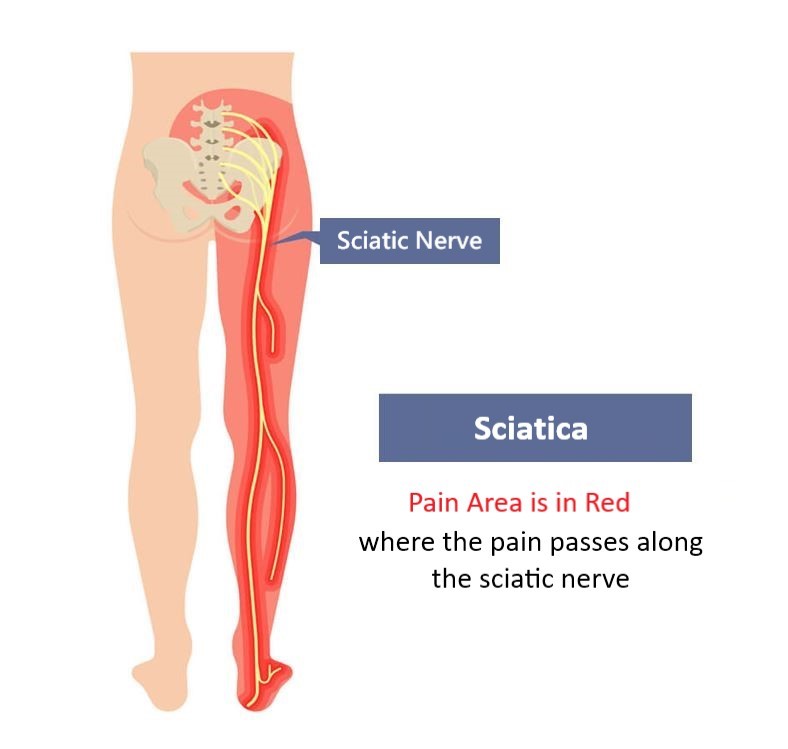
The sciatic nerve is the largest nerve in the body. It begins in the lower spine, travels through the buttock, and extends down the back of each leg.
When irritation occurs, symptoms may include:
- Pain travelling down the leg
- Tingling or pins and needles
- Leg numbness
- Burning sensations
- Tightness in the buttock
- Calf discomfort
- Foot symptoms
- Weakness in the affected leg
For many people, the symptoms affect one side of the body and can significantly interfere with work, commuting, exercise, and sleep.
Does This Sound Familiar?
Many patients visiting our clinic describe:
- “I can’t sit through a meeting without my leg going numb.”
- “The pain starts in my buttock and shoots down my leg.”
- “Standing up after sitting is extremely painful.”
- “Driving makes my symptoms worse.”
- “My calf feels tight all the time.”
- “My leg feels heavy when I walk.”
- “I’ve been stretching for weeks but nothing changes.”
If this sounds familiar, sciatic nerve irritation may be contributing to your symptoms.
Common Signs of Sciatica
Pain Pulling Down the Leg
Pain often begins in the lower back or buttock before extending into the thigh, calf, or foot.
Patients frequently describe the pain as:
- Pulling
- Burning
- Electric-like
- Sharp
- Aching
Sitting Makes Symptoms Worse
Prolonged sitting places increased pressure on structures in the lower back.
Many office workers in Hong Kong notice symptoms worsening during:
- Desk work
- Long meetings
- Driving
- MTR journeys
- Flights
Difficulty Getting Up
A common complaint is:
“I’m fine once I get moving, but standing up is terrible.”
Many patients experience a combination of stiffness, pain, and hesitation when getting out of a chair or bed.
Leg Numbness or Tingling
Sciatic irritation can produce:
- Pins and needles
- Numbness
- Altered sensation
- Burning feelings
- Heaviness in the leg
Symptoms may extend all the way into the foot and toes.
Pain When Bending Forward
Everyday activities such as:
- Putting on shoes
- Tying shoelaces
- Picking objects off the floor
- Leaning over a sink
may aggravate symptoms.
Why Identifying the Root Cause Matters
Sciatica is a symptom.
The more important question is:
What is causing the nerve irritation?
Without understanding the source, symptoms often continue to return despite temporary relief measures.
At YourSpine Centre, assessment may include:
- Health history review
- Neurological examination
- Orthopaedic testing
- Reflex assessment
- Muscle strength testing
- Postural evaluation
- Spinal mobility assessment
- Review of MRI reports (if available)
The purpose is to identify possible factors contributing to irritation of the sciatic nerve and guide appropriate care recommendations.
Common Causes of Sciatica
Lumbar Disc Herniation
One of the most common causes of sciatica is a bulging or herniated disc in the lower back.
When disc material irritates nearby nerve roots, pain may travel into the leg.
Related Reading: Herniated Disc Treatment in Hong Kong
Joint Restriction and Degenerative Changes
Reduced spinal mobility and age-related changes may contribute to narrowing around spinal nerves and irritation during movement.
Deep Gluteal or Piriformis Muscle Tension
In some cases, irritation may occur as the nerve travels through the buttock region.
Prolonged sitting often aggravates these structures.
Postural and Mechanical Stress
Extended desk work, prolonged sitting, repetitive strain, and poor movement habits can increase mechanical stress on the lower back and pelvis.
Conservative Care Options for Sciatica
Following assessment, an individualised care plan may include conservative approaches aimed at improving spinal function and reducing mechanical stress.
Non-Surgical Spinal Decompression
Spinal decompression uses controlled traction to reduce loading around specific spinal structures.
It is frequently considered when disc-related irritation is suspected.
Shockwave Therapy (ESWT)
Shockwave Therapy may be used to address persistent muscle tension affecting the lower back, pelvis, and gluteal region.
It is commonly incorporated into broader conservative care plans.
Chiropractic Care
Chiropractic care focuses on spinal mobility, joint function, and movement mechanics.
Treatment approaches are tailored according to:
- Clinical findings
- Age
- Activity levels
- Health history
- Symptom presentation
- Available imaging
Why Patients Often Delay Seeking Help
One of the most common statements we hear is:
“I thought it would go away by itself.”
Many people wait weeks or months before seeking assessment.
During that time they may:
- Avoid exercise
- Walk less
- Sit differently
- Change sleeping positions
- Reduce social activities
- Depend on temporary symptom relief
Persistent symptoms affecting daily life often warrant professional evaluation.
Understanding the source of the problem is the first step toward making informed decisions about your health.
Key Takeaways
- Sciatica is a symptom rather than a diagnosis.
- Pain may travel from the lower back into the buttock, thigh, calf, or foot.
- Prolonged sitting commonly aggravates symptoms.
- A herniated disc is a common cause, but not the only cause.
- Identifying the source of nerve irritation is important before beginning treatment.
- Conservative care options may help depending on the underlying cause.
Frequently Asked Questions About Sciatica
How Do I Know If My Leg Pain Is Sciatica or a Pulled Hamstring?
A pulled hamstring usually causes localised soreness in the back of the thigh.
Sciatica often begins in the lower back or buttock and may extend below the knee into the calf or foot, frequently accompanied by tingling or numbness.
Does Sitting Make Sciatica Worse?
For many people, yes.
Prolonged sitting increases pressure on structures in the lower back and may worsen symptoms.
Can Sciatica Cause Foot Numbness?
Yes.
Depending on the nerve involved, symptoms may extend into the foot and toes.
Can Sciatica Affect Walking?
Yes.
Some people notice weakness, heaviness, discomfort, or altered sensation during walking.
Can Sciatica Occur Without Back Pain?
Yes.
Some patients primarily experience symptoms in the buttock, leg, calf, or foot with little lower back pain.
When Should I Get Sciatica Assessed?
If symptoms are affecting work, mobility, exercise, sleep, or daily activities, a professional assessment may help identify the underlying cause.
Red Flags: Seek Immediate Medical Attention
Although many cases can be managed conservatively, certain symptoms require urgent hospital assessment.
Seek immediate medical attention if you experience:
Loss of Bowel or Bladder Control
Difficulty controlling urination or bowel function.
Saddle Numbness
Numbness around the groin, buttocks, inner thighs, or saddle region.
Progressive Leg Weakness
Increasing weakness, foot drop, or difficulty lifting the foot.
Severe Unrelenting Pain
Pain that rapidly worsens or remains severe regardless of position.
Conveniently Located in Tsim Sha Tsui, Hong Kong
Living with sciatica can make travelling across the city uncomfortable, particularly when sitting for extended periods aggravates your symptoms.
YourSpine Centre is conveniently located in Tsim Sha Tsui, Hong Kong, approximately a 10-minute walk from Tsim Sha Tsui MTR Station. As one of Hong Kong’s major commercial and transport districts, Tsim Sha Tsui is easily accessible for patients travelling from Hong Kong Island, Kowloon, and the New Territories.
Whether you’re attending before work, after work, or during the day, our central location makes it convenient to access professional spinal assessment and conservative care in the heart of Hong Kong.
Don’t Ignore Persistent Leg Pain, Numbness, or Sciatica
If pain travelling down your leg, persistent numbness, tingling, or sitting discomfort has been affecting your quality of life, understanding the cause is the first step.
A comprehensive spinal and neurological assessment can help determine whether sciatica, a lumbar disc issue, or another underlying condition may be contributing to your symptoms and whether conservative management may be appropriate.
WhatsApp Us Today (Click here to whatsapp)
Speak with our clinic team, discuss your symptoms, or enquire about appointment availability.
Book Your Consultation (Clikc here to call)
Arrange an assessment with a registered chiropractor at YourSpine Centre in Tsim Sha Tsui, Hong Kong.